CJ프레시웨이 단체급식 메뉴 개발의 모든 것
푸드서비스 | 2026.07.24
" 콘텐츠를 메뉴로, 메뉴를 경험으로”
CJ프레시웨이 메뉴 개발의 모든 것
드라마·예능·영화 등 인기 IP를 단체급식 메뉴로 재해석
메뉴시너지팀 이용규 님이 들려주는 메뉴 개발과 현장 적용 이야기
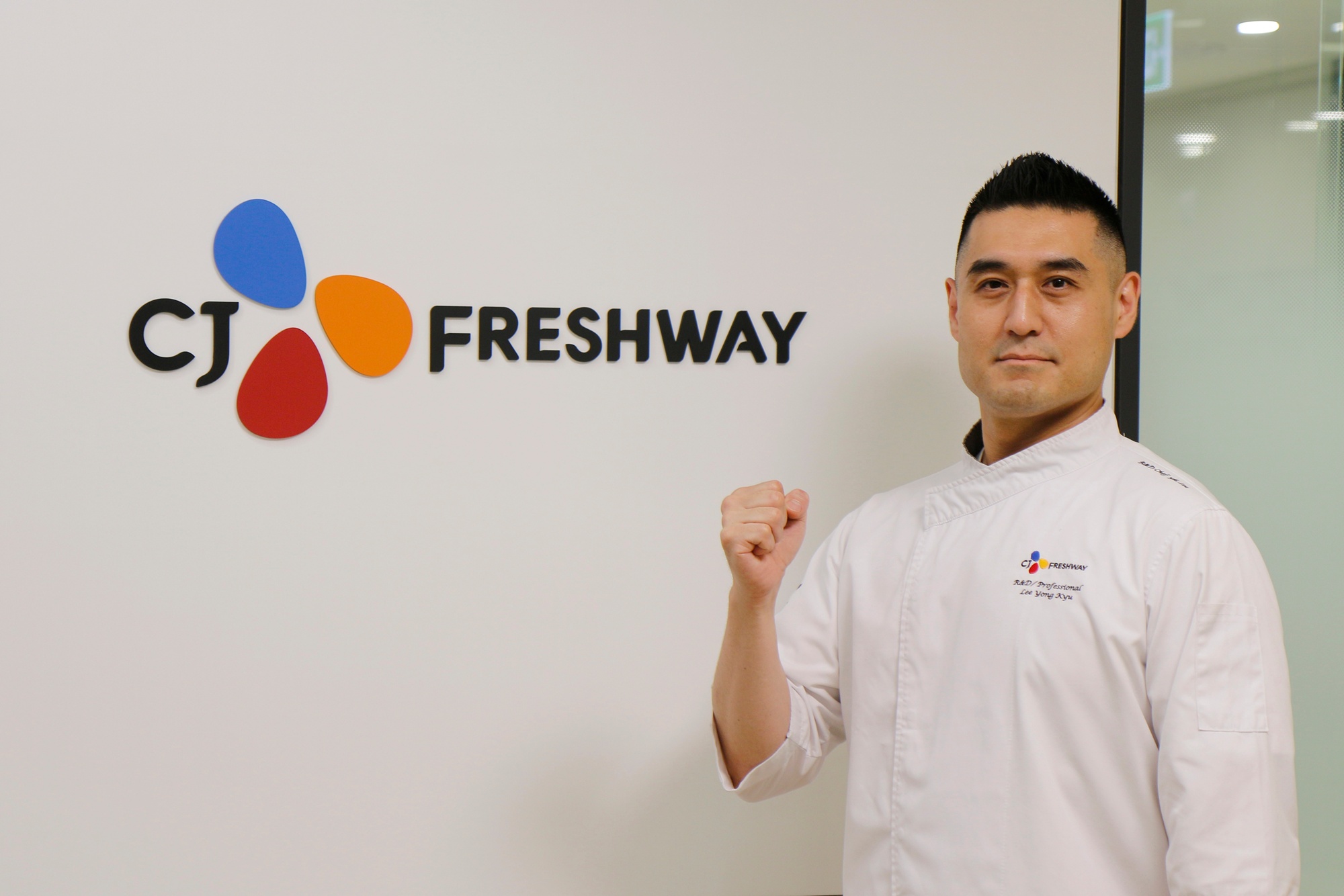
단체급식 시장은 과거 ‘식판 음식’ 중심의 식사 제공에서 벗어나 메뉴 다양화, 개별 식기 도입, 식당 공간 고급화 등 차별화된 식사 경험을 제공하는 방향으로 진화하고 있다. 특히 코로나19 이후 사내 카페와 간편식 코너, 팝업형 브랜드 메뉴, 셰프 협업 특식 등이 확대되면서 급식장은 직장인의 점심 공간을 넘어 일상 속 미식 경험을 제공하는 채널로 자리 잡았다.
단체급식이 기업 복지와 임직원 경험을 구성하는 중요한 요소로 부상하면서 사내식당에서도 외식 수준의 메뉴와 차별화된 식사 경험에 대한 수요가 높아지고 있다. 이에 대응해 CJ프레시웨이는 메뉴시너지팀을 중심으로 단체급식에 특화된 메뉴 개발 역량을 축적하고 있다.
메뉴 개발 역량은 안정적이고 효율적인 급식 운영을 기반으로 외식 트렌드와 다양한 콘텐츠를 결합해 이용객 만족도를 높이는 핵심 경쟁력이다. 신규 사업장 수주뿐 아니라 기존 사업장의 서비스 경쟁력과 재계약 가능성을 높이는 주요 요인으로도 주목받고 있다.
메뉴 경쟁력이 곧 사업 경쟁력으로 이어지는 지금, 단체급식 트렌드를 선도하기 위해 CJ프레시웨이는 어떤 노력을 기울이고 있을까. CJ프레시웨이 메뉴시너지팀에서 단체급식 메뉴 개발 11년 경력의 전문가 이용규님을 만나 이야기를 들어봤다.
메뉴 경쟁력이 곧 사업 경쟁력으로 이어지는 지금, 단체급식 트렌드를 선도하기 위해 CJ프레시웨이는 어떤 노력을 기울이고 있을까. CJ프레시웨이 메뉴시너지팀 이용규 님을 만나 이야기를 들어봤다.
Q. CJ프레시웨이에서 근무한 지 얼마나 됐나.
CJ프레시웨이에서 약 11년간 근무했다. 이전에는 외식 분야에서 일했다. 당시 CJ프레시웨이에서 메뉴 개발자가 필요하다는 제안을 받고 합류했다.
처음에는 급식이라고 하면 군대에서 먹었던 식사 정도만 떠올랐다. 그러나 당시에도 급식 시장은 기존의 획일적인 식판식에서 벗어나 외식형으로 변화하고 있었다. 실제 업무를 해보니 단순히 메뉴를 만드는 데 그치지 않고 원가와 운영, 고객사 요구, 현장 적용 가능성까지 종합적으로 고려해야 하는 분야였다. 이러한 점에서 매력을 느껴 지금까지 근무하게 됐다.
Q. 단체급식 메뉴 하나가 실제 사업장에 제공되기까지 어떤 과정을 거치나.
단체급식 메뉴는 고객사 요구와 외식 트렌드, 제철 식재료, 원가, 대량 조리 적합성, 현장 운영 환경 등을 종합적으로 검토해 개발한다. 하나의 메뉴가 실제 사업장에 제공되기까지는 메뉴 콘셉트 선정, 대상 사업장 검토, 메뉴 개발 및 테스트, 내부 시연회, 현장 레시피 공유와 교육, 실제 제공 순으로 진행된다.
특히 단체급식 메뉴는 맛뿐 아니라 현장에서 안정적으로 구현할 수 있는지가 중요하다. 같은 메뉴라도 사업장의 식단가와 조리 인력, 배식 방식, 고객 연령대에 따라 레시피와 구성 방식이 달라질 수 있기 때문에 개발 단계부터 현장 적용성을 함께 검토한다.
대표적인 사례로 충청 지역의 ‘못난이 수박’을 활용한 수박막국수 개발이 있다. 지역 농산물을 단체급식 메뉴로 재해석하기 위해 현지 맛집을 직접 방문해 메뉴의 배경과 조리 노하우를 확인했다. 이후 대량 조리와 배식에 적합하도록 레시피를 조정했다. 약 일주일간 개발과 테스트를 거쳐 내부 시연회를 진행했고, 대상 사업장의 조리사 교육과 현장 품질 점검까지 이어졌다.
단체급식 메뉴 개발은 단순히 레시피를 만드는 일이 아니다. 외식 트렌드와 지역 상생의 가치, 고객 만족, 현장 운영 효율을 함께 고려하는 종합적인 과정이다.
Q. 단체급식 메뉴 하나를 개발하는 데는 얼마나 걸리나.
메뉴의 종류와 대상 사업장에 따라 크게 다르다. 기존에 보유한 표준 메뉴 데이터베이스를 활용할 수 있다면 일부 수정만으로 짧은 시간 안에 개발할 수 있다.
CJ프레시웨이는 전국 단체급식 사업장에서 운영한 메뉴와 고객 반응을 취합해 약 1만7000건 규모의 표준 메뉴 데이터베이스를 구축하고 지속적으로 업데이트하고 있다. 데이터베이스에는 식재료 구성, 대량 조리 적합성, 배식 방식, 고객 반응 등 메뉴 기획과 운영에 필요한 정보가 축적돼 있어 사업장 특성에 맞게 응용할 수 있다.
이를 바탕으로 고객사의 업종과 취식 연령대, 근무 형태, 식단가 등에 적합한 메뉴를 신속하게 설계한다. 본사 차원에서 메뉴 개발 역량을 중앙화함으로써 전국 단위 수주 시연회와 신규 사업장 개점, 재계약 품평회, 대형 테마 메뉴 개발 등에서도 사업장별 특성을 반영한 맞춤형 제안이 가능하다.
반면 제공 단가가 높거나 외식에 가까운 수준의 메뉴는 새로운 식재료와 상품을 발굴하고 원가까지 검토해야 해 시간이 오래 걸린다. 골프장이나 레저 사업장처럼 1인당 2만~3만 원 수준의 고품질 메뉴를 요구하는 곳은 개발과 테스트에 1~2주가 소요되기도 한다.
Q. 메뉴 개발자가 현장 품질 관리에도 참여하나.
메뉴 개발은 레시피를 만드는 것으로 끝나지 않는다. 현장에서 동일한 품질로 구현되는지 확인하고, 문제가 발생하면 원인을 찾아 수정해야 한다.
사업장에서는 음식의 염도와 온도, 식재료 사용량 등을 세밀하게 관리한다. 레시피에 정해진 중량대로 조리했는지, 염도와 온도가 기준에 맞는지도 확인한다.
특히 지역별로 선호하는 맛이 다르기 때문에 본사에서 맛있다고 판단한 메뉴가 모든 지역에서 좋은 반응을 얻는 것은 아니다. 현장 피드백을 받아 지역 특성에 맞게 레시피를 조정하는 과정이 필요하다.
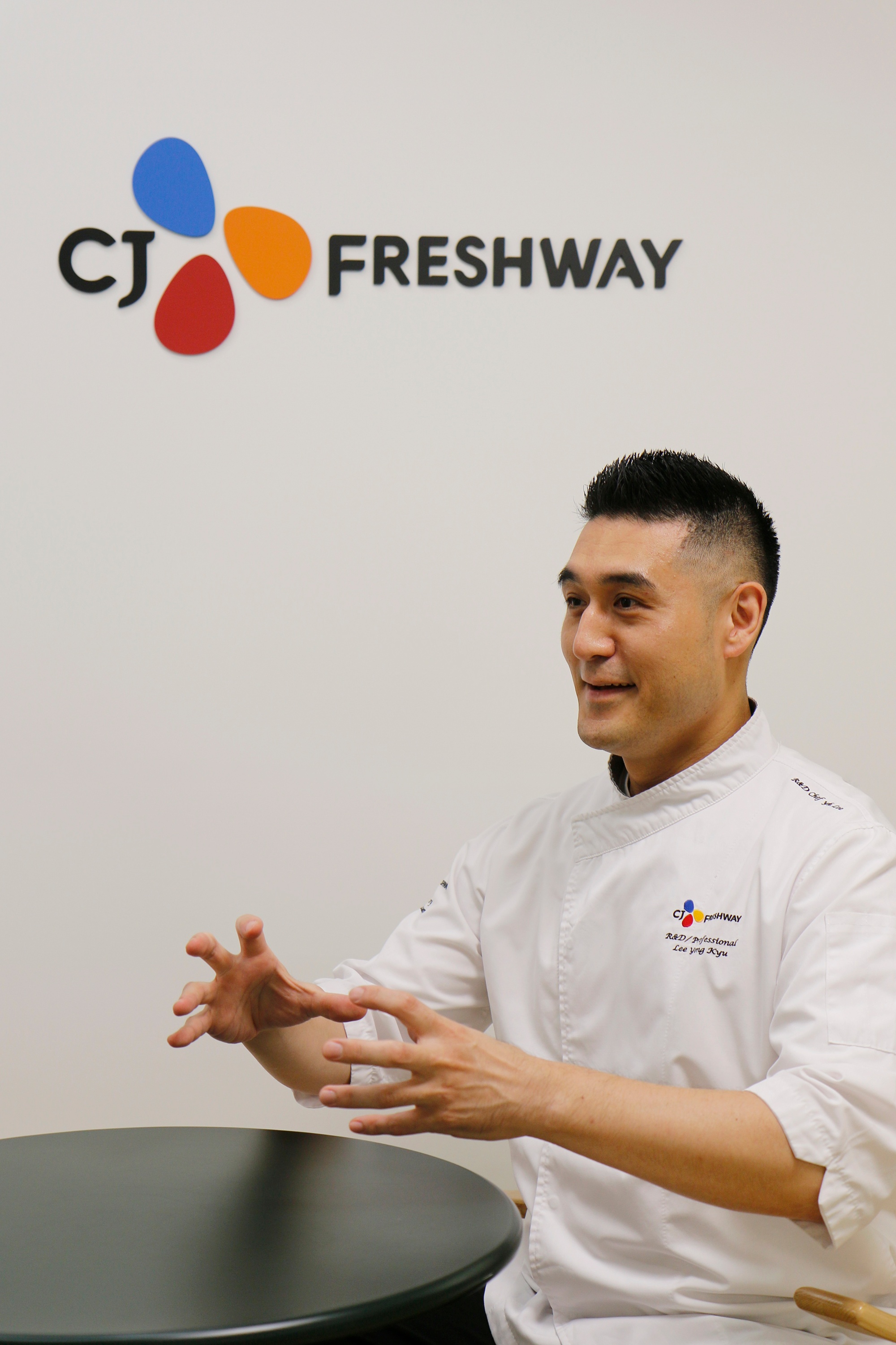
Q. 최근 유명 프로그램이나 셰프 협업 메뉴가 많이 보이는데 어떠한 효과가 있나.
CJ프레시웨이는 예능과 드라마, 영화 등 다양한 장르의 IP를 활용한 이벤트를 지속 확대하며 단체급식 트렌드를 선도하고 있다.
지난 2024년 업계 최초로 드라마 및 영화 IP를 활용한 특식 이벤트를 진행한 데 이어, 2025년과 2026년에도 영화 <미션 임파서블: 파이널 레코닝>, <왕과 사는 남자>, 예능 <무쇠소녀단2>, 드라마 <태풍상사>, <서초동> 등 다양한 작품과 연계한 특식을 선보여 고객 만족도를 높이고 있다.
IP 콜라보 메뉴 출시 등과 같은 특식 개발의 가장 직접적인 효과는 구내식당 이용 인원인 식수가 증가한다는 점이다. 협업 메뉴를 운영할 때는 고객사와 사전에 일정을 협의하고, 고객사가 사내 메일이나 게시판 등을 통해 임직원에게 알린다. 평소 외부 식당을 이용하던 직원도 유명 콘텐츠나 셰프와 협업한 메뉴가 나온다는 소식을 접하면 구내식당을 찾는다. 실제 이용 인원을 기준으로 정산하는 사업장이 많기 때문에 식수가 증가하면 매출과 손익 개선으로 이어진다.
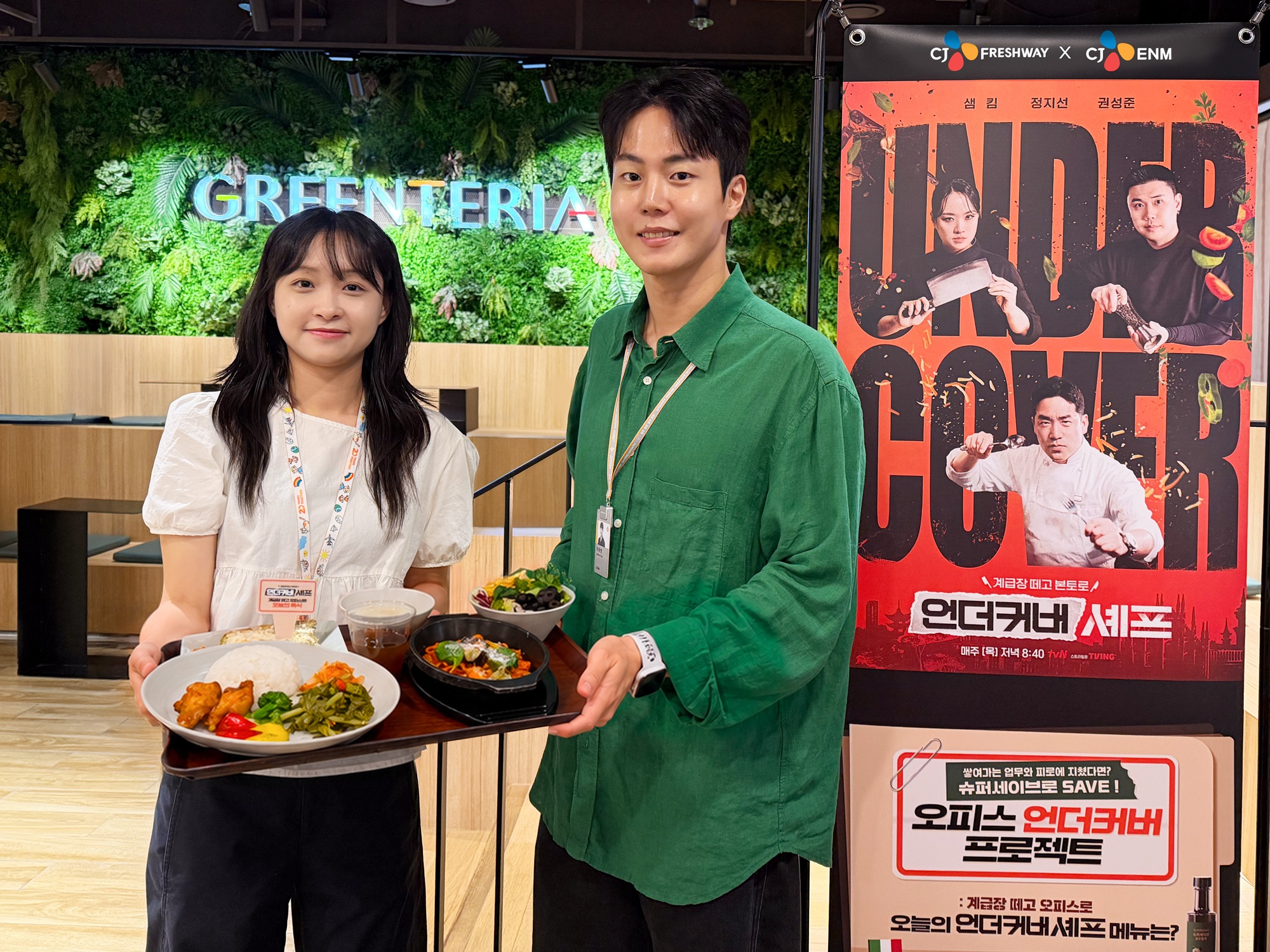
실제 사례를 예로 들면 2026년 1월 영화 <왕과 사는 남자> IP를 활용한 수라상 콘셉트의 메뉴를 출시한 바 있다. 당시 10개 사업장에서 특식이 제공됐는데 식수인원이 전주 대비 10.7% 증가한 것으로 나타났다. 2026년 6월에는 tvN 인기 예능 프로그램 <언더커버 셰프>에 나왔던 이탈리아 나폴리 현지 식당의 시그니처 메뉴를 단체급식 메뉴로 구현했는데 당시에도 식수 인원이 전주와 비교해 8.8% 늘었다.
여러 급식업체가 함께 운영하는 대형 사업장에서는 효과가 더 크다. 평소에는 가까운 식당을 이용하던 직원도 특별한 협업 메뉴가 있으면 다소 먼 곳까지 이동한다. 경쟁 사업장과 차별화하는 수단이 되는 것이다.
Q. 방송에 등장한 메뉴를 단체급식으로 구현하는 과정이 쉽지는 않을 것 같다.
외식 매장에서 한 접시를 만드는 것과 수백 명분을 동시에 조리하는 것은 전혀 다르다. 방송 속 메뉴가 맛있어 보여도 급식 현장에서 같은 방식으로 조리할 수 있는지는 별개의 문제다.
대량으로 조리했을 때도 품질이 유지되는지, 배식 시간 동안 맛과 식감이 변하지 않는지, 정해진 원가 안에서 제공할 수 있는지 등을 모두 검토해야 한다.
최근에는 메뉴만 개발해서도 안 된다. 콘텐츠 IP와 셰프, 홍보물, 현장 이벤트, 사내 홍보가 유기적으로 움직여야 한다. 음식과 마케팅, 엔터테인먼트가 결합하는 형태로 발전하고 있다.
Q. 일반 급식과 간편식은 어떤 관계인가.
간편식은 일반 급식을 대체하기보다 이용자의 선택지를 넓히는 역할을 한다. 공간이 부족해 간편식을 제공하는 경우도 있지만, 최근에는 고객의 다양한 식사 목적을 충족하기 위해 일반 급식과 간편식을 함께 운영하는 사업장이 많다.
일반 식사 외에도 건강식 도시락과 샌드위치, 샐러드 등을 선택할 수 있다. 식당에서 먹을 수도 있고 본인의 자리나 별도 휴게 공간에서 먹을 수도 있다. 대형 오피스에서는 여러 식당 코너와 간편식 코너를 함께 운영하는 경우가 많다. 고객이 건강과 편의성, 메뉴 취향에 따라 식사를 선택할 수 있도록 하는 것이다.
Q. 조리시설이 부족한 사업장에서는 어떤 방식으로 급식을 제공하나.
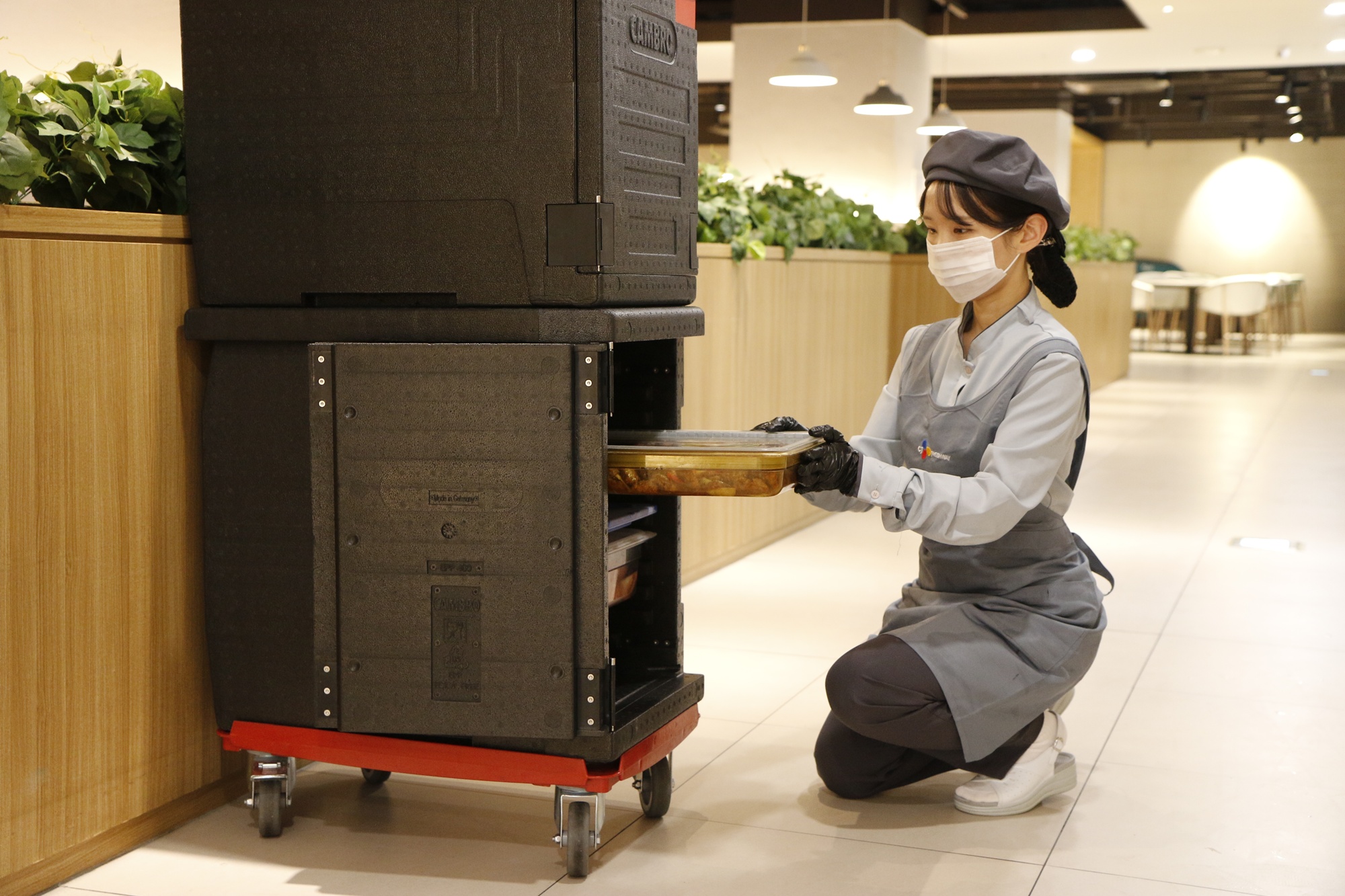
조리시설이 충분하지 않은 사업장에서는 이동형 F&B 서비스가 활용된다. 외부에서 음식을 조리한 뒤 현장에서는 데우거나 간단한 마무리 조리만 거쳐 제공하는 방식이다.
이 경우 일반 급식과는 다른 메뉴 개발 기준이 필요하다. 조리 직후에는 맛있어도 이동과 보관, 재가열 과정을 거치면 음식이 지나치게 익거나 식감이 떨어질 수 있기 때문이다.
따라서 처음 조리할 때 완성도를 100%까지 끌어올리는 것이 아니라 이동 시간과 재가열 시간을 계산해 조리 정도를 조절해야 한다. 식재료마다 조리 시간을 다르게 설계하고, 실제 이동과 재가열 테스트도 반복한다.
Q. 앞으로 어떤 급식 비즈니스가 성장할 것으로 보는가.
키친리스와 자동화 관련 영역이 확대될 것으로 본다. 현장에서 직접 조리하는 인력을 구하기 어려워지고 있고, 이를 대체할 수 있는 반조리 상품과 조리 설비가 계속 고도화되고 있기 때문이다.
공항과 컨세션 사업장은 일정한 품질과 위생, 빠른 제공 속도를 동시에 맞춰야 한다. 이런 곳에서는 사람이 처음부터 모든 음식을 조리하기보다 표준화된 상품과 자동화 설비를 활용하는 비중이 커질 가능성이 높다.
다만 프리미엄 오피스나 임원식처럼 높은 품질과 섬세한 조리가 필요한 영역은 사람의 기술을 완전히 대체하기 어렵다. 일반 단체급식에서는 자동화와 키친리스가 확대되고, 고급 급식에서는 사람의 전문성이 더욱 중요해지는 방향으로 발전할 것으로 예상한다.
Q. 향후 단체급식 메뉴 트렌드를 한마디로 정리한다면.
단체급식은 단순히 한 끼를 제공하는 사업에서 콘텐츠와 경험을 제공하는 사업으로 변화하고 있다. 방송과 SNS에서 유행한 메뉴를 빠르게 반영하고 유명 셰프와 브랜드, 콘텐츠 IP를 활용해 고객에게 특별한 경험을 제공하는 방향으로 발전하고 있다.
CJ프레시웨이는 CJ그룹 계열사의 다양한 콘텐츠와 IP를 활용할 수 있다는 점에서 메뉴 협업을 신속하게 추진할 수 있는 강점을 가지고 있다. 앞으로도 트렌드형 메뉴와 IP 협업, 키친리스 등 새로운 형태의 급식 서비스가 더욱 확대될 것으로 본다.
※ 전문가 프로필 : CJ프레시웨이 메뉴시너지팀 이용규님
□ 전문 분야 : 단체급식 메뉴 개발 및 외식 조리
□ CJ푸드빌(2012~2015년) : 외식 사업장 셰프직 근무
□ CJ프레시웨이(2015년~현재) : 단체급식 메뉴 개발 경력 11년
□ 일본 현지 외식업 경험 및 가이세키 조리 역량 보유
“Turning Content into Menus, and Menus into Experiences”
Inside CJ Freshway’s Menu Development Process
The contract foodservice market has evolved beyond the traditional model of serving standardized meals on compartment trays. Today, operators are creating differentiated dining experiences through more diverse menus, individual tableware, and upgraded dining spaces. Since the COVID-19 pandemic in particular, workplace cafés, grab-and-go sections, pop-up branded menus, and special meals developed in collaboration with chefs have become increasingly common. As a result, workplace cafeterias are no longer simply places where employees have lunch. They are emerging as channels that offer memorable culinary experiences in everyday life.
As contract foodservice becomes an increasingly important component of employee welfare and the overall workplace experience, demand is growing for restaurant-quality menus and differentiated dining experiences in corporate cafeterias. In response, CJ Freshway has continued to strengthen its menu development capabilities for contract foodservice, led by its Menu Synergy Team.
Menu development has become a core competitive capability that combines stable and efficient foodservice operations with dining trends and a wide range of content to increase customer satisfaction. It is also attracting attention as a key factor in winning new contracts, enhancing service competitiveness at existing sites, and improving contract renewal prospects.
At a time when menu competitiveness translates directly into business competitiveness, what is CJ Freshway doing to lead contract foodservice trends? We spoke with Lee Yong-gyu of CJ Freshway’s Menu Synergy Team.
Q. How long have you been with CJ Freshway?
I have worked at CJ Freshway for approximately 11 years. Before joining the company, I worked in the restaurant industry. I joined CJ Freshway after being approached about an opening for a menu developer.
At first, when I thought of institutional foodservice, the only image that came to mind was the food I had eaten during my military service. However, even at that time, the foodservice market was already moving away from standardized tray meals toward a more restaurant-style model.
Once I began working in the field, I realized that the job involved much more than simply creating menus. It requires a comprehensive review of food costs, operations, client requirements, and whether a menu can actually be implemented at each site. I found that aspect of the work highly appealing, and it is one of the reasons I have stayed with the company to this day.
Q. What process does a contract foodservice menu go through before it is served at an actual site?
Contract foodservice menus are developed through a comprehensive review of client requirements, dining trends, seasonal ingredients, food costs, suitability for large-scale preparation, and each site’s operating environment.
Before a menu is served at a site, it generally goes through the following stages: selecting a menu concept, reviewing the target sites, developing and testing the menu, conducting an internal tasting and presentation, sharing recipes and providing on-site training, and finally serving the menu to customers.
For contract foodservice, it is particularly important that a menu can be prepared consistently and reliably in the field, in addition to tasting good. Even the same menu may require different recipes or configurations depending on the site’s meal budget, kitchen staffing, serving method, and customer age group. For that reason, on-site feasibility is reviewed from the earliest stages of development.
One representative example was the development of watermelon makguksu using “imperfect” watermelons from the Chungcheong region. To reinterpret a regional agricultural product as a contract foodservice menu, we visited a well-known local restaurant to understand the background of the dish and learn its preparation techniques.
We then adjusted the recipe to make it suitable for large-scale cooking and service. After approximately one week of development and testing, we held an internal tasting and presentation, trained the cooks at the participating sites, and conducted on-site quality inspections.
Developing a contract foodservice menu is not simply about creating a recipe. It is a comprehensive process that must consider dining trends, the value of supporting local communities, customer satisfaction, and operational efficiency at the same time.
Q. How long does it take to develop a single menu?
It varies considerably depending on the type of menu and the site where it will be served. When we can use an existing menu from our standardized database, a new menu can sometimes be developed quickly with only minor adjustments.
CJ Freshway has built and continues to update a standardized database containing approximately 17,000 menus that have been served at its contract foodservice sites nationwide, together with customer feedback.
The database contains information needed for menu planning and operations, including ingredient composition, suitability for large-scale preparation, serving methods, and customer responses. This allows us to adapt menus to the characteristics of individual sites.
Based on this data, we can quickly design menus tailored to the client’s industry, customer age group, work patterns, and meal budget. By centralizing menu development capabilities at the head-office level, we are also able to make customized proposals for nationwide contract presentations, new site openings, contract renewal evaluations, and large-scale themed menu programs.
Menus with higher price points or restaurant-level quality, however, take longer to develop because they require us to source new ingredients and products while also reviewing costs. At golf courses, leisure facilities, and other sites where premium menus priced at KRW 20,000 to KRW 30,000 per person are required, development and testing can take one to two weeks.
Q. Do menu developers also participate in on-site quality management?
Menu development does not end when the recipe is completed. We must confirm that the menu is being prepared to the same standard at each site and, when a problem occurs, identify the cause and make the necessary adjustments.
At foodservice sites, factors such as salinity, food temperature, and ingredient quantities are carefully managed. We check whether the specified ingredient weights were followed and whether salinity and temperature meet the required standards.
Taste preferences also differ by region. A menu considered delicious at head office may not receive the same response in every part of the country. We therefore need to collect feedback from each site and adjust recipes to reflect local preferences.
Q. CJ Freshway has recently introduced many menus developed in collaboration with popular programs and chefs. What benefits do these collaborations create?
CJ Freshway continues to expand themed events using IP from a wide range of genres, including entertainment programs, television dramas, and films, helping lead trends in the contract foodservice industry.
In 2024, CJ Freshway became the first company in the industry to hold special meal events using drama and film IP. In 2025 and 2026, we continued to offer special menus linked to a variety of productions, including the films Mission: Impossible – The Final Reckoning and The King and the Man Who Lived With Him, the entertainment program Iron Girls 2, and the television dramas Typhoon Family and Law and the City. These programs have contributed to higher customer satisfaction.
The most direct effect of special menus, including IP collaboration menus, is an increase in the number of people using workplace cafeterias. Before introducing a collaboration menu, we coordinate the schedule with the client, which then promotes the event to employees through internal emails, bulletin boards, and other channels.
Even employees who normally eat at restaurants outside the workplace may visit the cafeteria after learning that a menu developed with a well-known program or chef will be served. Since many contracts are settled according to the actual number of meals served, higher participation can directly improve sales and profitability.
For example, in January 2026, CJ Freshway launched a royal banquet-themed menu using IP from the film The King and the Man Who Lived With Him. The special meal was served at 10 sites, where the number of diners increased by 10.7% compared with the previous week.
In June 2026, we recreated the signature menu of a restaurant in Naples, Italy, that had appeared on the popular tvN entertainment program Undercover Chef. The number of diners increased by 8.8% compared with the previous week.
The impact is even greater at large workplaces where several foodservice companies operate at the same time. Employees who would normally use the nearest cafeteria may be willing to walk farther to try a special collaboration menu. In that sense, these menus also serve as a means of differentiating our services from those of competing operators.
Q. Recreating menus featured on television for contract foodservice must be challenging.
Preparing a single plate in a restaurant and cooking hundreds of portions at once are entirely different tasks. A menu may look appealing on television, but that does not necessarily mean it can be prepared in the same way at a foodservice site.
We must review whether the quality can be maintained when the menu is prepared in large quantities, whether its flavor and texture will remain stable throughout the serving period, and whether it can be provided within the required food-cost parameters.
Today, simply developing the menu is no longer enough. The content IP, chefs, promotional materials, on-site events, and internal client communications all need to work together. Contract foodservice is evolving into a format that combines food, marketing, and entertainment.
Q. What is the relationship between conventional foodservice and convenient meal options?
Convenient meal options do not replace conventional foodservice. Instead, they broaden the choices available to customers. In some cases, these options are introduced because of space limitations, but many sites now operate conventional foodservice and convenient meal sections together to accommodate a wider range of dining needs.
In addition to regular meals, customers may choose healthy lunch boxes, sandwiches, salads, and other options. They can eat them in the cafeteria, at their desks, or in a separate lounge area.
Large office buildings often operate multiple food stations alongside grab-and-go sections. The goal is to allow customers to select meals according to their health priorities, need for convenience, and personal menu preferences.
Q. How are meals provided at sites with limited cooking facilities?
At sites without sufficient cooking facilities, mobile food and beverage services can be used. Food is prepared at an external facility and then reheated or finished with minimal cooking on site before being served.
This model requires different menu development standards from conventional foodservice. A dish may taste excellent immediately after cooking but become overcooked or lose its texture during transportation, storage, and reheating.
For that reason, we do not cook the food to 100% completion at the initial preparation stage. Instead, we adjust the level of cooking by taking transportation and reheating times into account. Cooking times are designed differently for each ingredient, and we repeatedly test the entire transportation and reheating process.
Q. Which areas of the foodservice business do you expect to grow in the future?
I expect kitchenless operations and automation-related areas to expand. It is becoming increasingly difficult to recruit employees who can cook directly at foodservice sites, while partially prepared products and cooking equipment capable of supplementing or replacing manual labor continue to advance.
Airports and concession sites must provide consistent quality, high standards of hygiene, and fast service at the same time. At these locations, the use of standardized products and automated equipment is likely to increase, rather than relying on employees to prepare every dish from scratch.
However, it will remain difficult to fully replace human expertise in areas that require high quality and delicate preparation, such as premium office dining and executive dining services.
I expect automation and kitchenless models to expand in mainstream contract foodservice, while the skills and expertise of culinary professionals will become even more important in premium foodservice.
Q. How would you summarize the future of contract foodservice menu trends in one sentence?
Contract foodservice is evolving from a business that simply provides a meal into one that delivers content and experiences.
The industry is increasingly reflecting menus that are trending on television and social media, while using famous chefs, brands, and content IP to provide customers with distinctive experiences.
CJ Freshway has a particular strength in its ability to quickly pursue menu collaborations by leveraging the wide range of content and IP owned by CJ Group affiliates. Going forward, I expect trend-driven menus, IP collaborations, kitchenless operations, and other new forms of foodservice to continue expanding.
※ Key Career Highlights of Lee Yong-gyu, Menu Synergy Team, CJ Freshway
□ CJ Foodville (2012–2015): Worked as a chef at restaurant operations
□ CJ Freshway (2015–Present): Responsible for contract foodservice menu development
□ Professional experience in Japan’s restaurant industry and expertise in kaiseki cuisine
□ 11 years of experience in contract foodservice menu development
게시일: 2026년 7월 24일 | 최종 업데이트일: 2026년 7월 24일
 타깃플랫폼
타깃플랫폼
 고객센터
고객센터